
Rainy days used to wreck me. My preschooler would bounce off every wall while I scrambled for ideas that actually held attention longer than five minutes. These 13 indoor activities for preschoolers changed that. I tested them in real living rooms with real energy levels, and they deliver movement, calm, creativity, and actual learning without pulling out a tablet.
Why This List of Indoor Activities for Preschoolers Works
I picked these because they use stuff already in most houses. No fancy kits required. I focused on activities that hit gross motor skills, fine motor work, sensory input, and imagination in equal measure. Research and parent forums keep pointing to the same core ideas year after year: obstacle courses, sensory play, simple science, and pretend games rise to the top for ages three to five. I left out anything that needs constant adult hovering or creates a cleanup nightmare I cannot handle alone. Honest trade-offs stay in every description.
1. Indoor Obstacle Course: The Ultimate Energy Burner
Pillows become mountains. Chairs turn into tunnels. Painter’s tape makes balance beams on the floor. I set this up in under ten minutes and my kid races through it for half an hour straight.
The standout feature is how easily you can change the route. One day it is crawl-under-the-table then hop-over-cushions. The next day I add a beanbag toss at the end. Preschoolers build coordination and problem-solving without realizing it. The only real downside is the living room looks like a storm hit until you put everything back. Worth it every time.
I still remember the first afternoon the course kept both of us laughing instead of arguing. Build it once and you will use it weekly.
2. Freeze Dance: Music Plus Self-Control
Crank a favorite playlist. Dance hard. When the music stops, freeze like a statue. My preschooler begs for this one on slow mornings.
It sneaks in listening skills and body awareness while burning pure energy. I sometimes call out animal poses for the freezes to keep it fresh. Honestly? The only caveat is volume. Neighbors might wonder what is happening upstairs. Keep a couple of quieter songs ready for the wind-down round.
This one resets a cranky mood faster than almost anything else on the list.
3. Balloon Volleyball: Low-Mess Movement
Blow up one balloon. Hit it back and forth. Try not to let it touch the floor. That is the whole game.
Hand-eye coordination improves fast and the balloon moves slow enough that three-year-olds succeed. I play on my knees so we stay eye-level. The trade-off is obvious: a popped balloon ends the fun abruptly, so keep two extras nearby. Still, this remains my go-to when I need five minutes of movement with almost zero setup.
See, sometimes the simplest tools win.
4. Sensory Bin Play: Calm in a Plastic Tub
Fill a shallow bin with dry rice, pasta, or oats. Bury small toys or scoops. Hand over tongs or measuring cups and step back.
Preschoolers dig, pour, and sort for surprisingly long stretches. The texture work supports fine motor strength they need for writing later. Cleanup is the honest downside. Rice finds every floor crack. I spread a sheet underneath now and it helps. I have used the same bin of rice for months with different themes. It never gets old.
This activity bought me quiet coffee more times than I can count.
5. Blanket Fort Building: Instant Private World
Drape blankets over chairs and the couch. Add pillows and a flashlight. Suddenly the living room becomes a cave or spaceship.
Imagination takes over. My kid invents stories inside for ages. Cooperation shows up when siblings help hold the walls. The caveat is stability. One enthusiastic crawl and the whole thing collapses. I teach a “gentle entry” rule early. Still, nothing creates cozier independent play.
Do not sleep on the flashlight storytelling session that usually follows.
6. Simon Says: Listening With a Twist
The classic rule game. Only move if Simon says so. I throw in silly commands like “Simon says hop like a frog” to keep giggles coming.
Impulse control gets a real workout. Preschoolers practice following directions and stopping on cue. The only downside is that some kids get frustrated when they are “out.” I run a non-elimination version where everyone just laughs and resets. It works better for our house.
This one travels well to grandparents’ houses with zero supplies needed.
7. Indoor Scavenger Hunt: Clues Around the House
Write or draw simple clues. Hide them so each one leads to the next. The final “treasure” can be a sticker or a snack.
Problem-solving and observation skills light up. I start with picture clues for younger preschoolers and move to simple words later. The trade-off is prep time. I keep a reusable set of clue cards in a drawer now so I am not reinventing the wheel every rainy day. Kids feel like detectives. That pride is contagious.
I still use the same “find something red” starter clue that worked on day one.
8. Homemade Playdough: Squish and Create
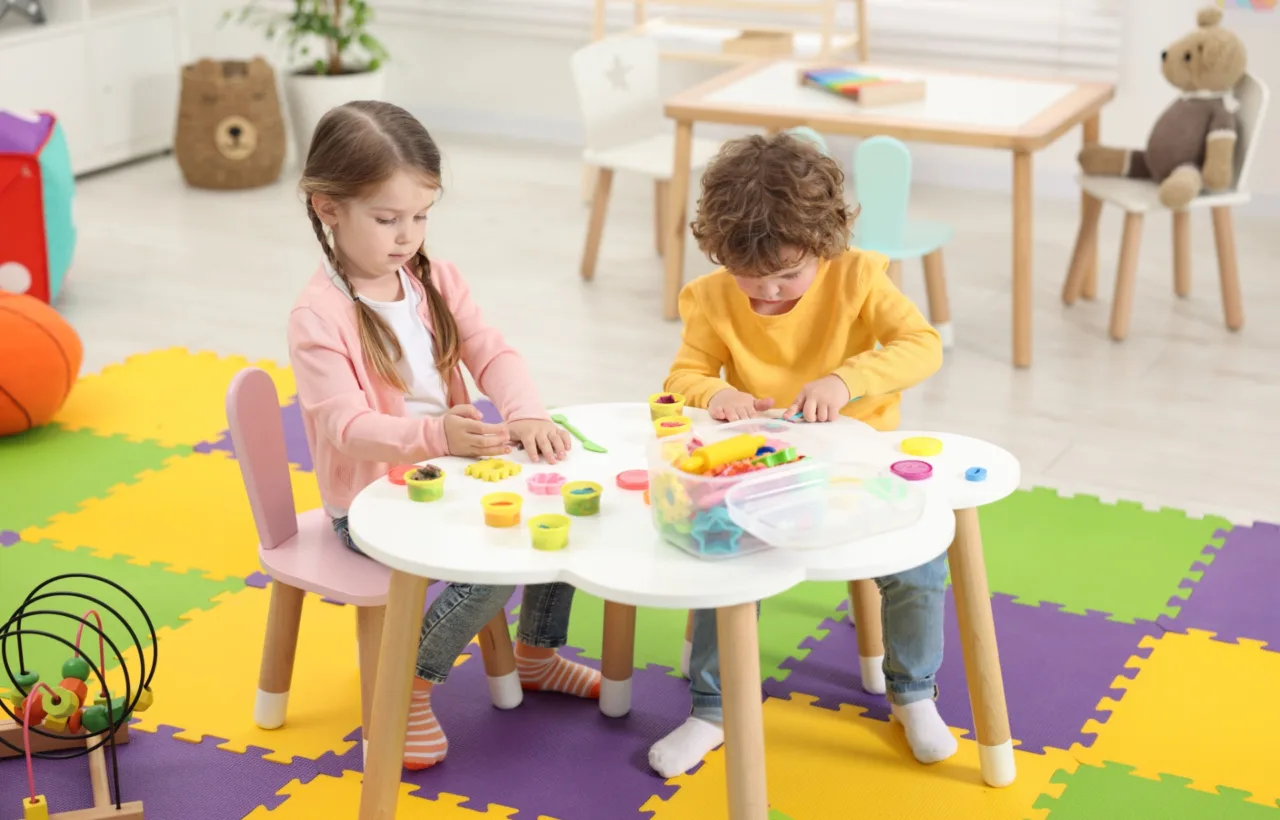
Mix flour, salt, water, and a little oil. Add food coloring if you want. Knead until soft. Done.
The process itself is half the fun. Rolling, cutting, and stamping builds hand strength. I keep a batch in a sealed bag for a week. The honest caveat is that it dries out if left open, and colored dough can stain hands for a bit. Still, this beats store-bought versions for pure sensory satisfaction in my experience.
See, the making is as valuable as the playing.
9. Unconventional Painting: Skip the Brush
Dip toy cars in paint and drive them across paper. Use sponges, cotton balls, or even potato halves as stamps. Washable paint only.
Creativity explodes when the usual tools disappear. Fine motor skills and color mixing happen naturally. Cleanup is the real work. I tape paper to a plastic tray now and the mess stays contained. My preschooler still talks about the day the toy dump truck made tire-track art. That memory sticks.
This activity taught me that process matters more than the final picture.
10. Dress-Up and Dramatic Play: Costumes Optional
Pull out old scarves, hats, or a cardboard box. Suddenly someone is a firefighter or a chef. Props from the kitchen drawer complete the scene.
Language skills and social role practice grow fast. I join for five minutes then step back so independent stories can unfold. The only downside is the scattered clothes afterward. I keep a dedicated basket now. Pretend play remains the longest-lasting activity on this entire list for us.
Honestly? Some of our best conversations happen in character.
11. Animal Walks: Zero Equipment Needed
Crawl like a bear. Hop like a frog. Slither like a snake. Race across the room in character.
Gross motor strength and bilateral coordination improve without any gear. I call out the animal and we move together. The caveat is space. You need a clear path so no one crashes into furniture. We do this in the hallway on tight days. It never fails to produce laughter and tired legs.
This is pure movement when the obstacle course feels like too much setup.
12. Baking Soda Volcano: Simple Science Drama
Pile baking soda in a small container. Add a few drops of dish soap and food coloring. Pour vinegar and watch the eruption.
Curiosity about cause and effect lights up immediately. I do this in a baking dish to catch the overflow. The mess is real but contained. Preschoolers ask “again!” every single time. I limit it to once a week so the magic stays strong. Science feels like play here, and that is exactly the point.
One eruption taught more about reactions than any worksheet ever could.
13. Shadow Puppet Theater: Lights Out Storytime
Turn off the main lights. Shine a flashlight on a blank wall. Use hands or cut simple paper shapes on sticks to make characters move.
Storytelling and fine motor control combine. My kid invents entire plots once the shadows appear. The only real limit is needing a darkish room and a willing adult to hold the light at first. Later they manage alone. This quiet activity balances all the high-energy ones earlier on the list.
I still hear the made-up monster voices from our first shadow show.
How to Choose Among These Indoor Activities for Preschoolers
Match the activity to the energy level in the room. High wiggles call for the obstacle course, freeze dance, or animal walks. Quiet focus days work better with sensory bins, playdough, or shadow puppets. I keep a mental rotation so nothing feels stale. Common mistake: forcing one activity too long. Preschool attention spans are short. Ten to twenty minutes of deep engagement beats an hour of half-hearted play. Personally I reach for the balloon volleyball or scavenger hunt when I need something fast and reliable. Watch what your child returns to on their own. That is the real signal of what works.
Frequently Asked Questions
What if my preschooler gets bored of these 13 indoor activities for preschoolers quickly? Rotate them and change small details. A new theme in the sensory bin or a different route in the obstacle course keeps interest high without new supplies.
Which activity works best for a child who struggles with following directions? Start with freeze dance or Simon Says. Both build listening skills in a playful way and give instant feedback.
How do I handle the mess from sensory bins or painting? Lay down an old sheet or plastic tablecloth first. Involve the child in cleanup as part of the activity. It becomes less of a battle over time.
Can these work for mixed ages if I have a toddler and a preschooler? Yes. Simplify the scavenger hunt clues or let the toddler free-play in the fort while the preschooler follows more rules. Most of these scale down easily.
What should I try first if I only have ten minutes? Balloon volleyball or animal walks. Zero prep and immediate movement.
These activities turned my most dreaded weather days into something I almost look forward to. The real win is watching a preschooler invent, move, and calm down using the same four walls that used to feel too small. Pick one tonight. Set it up. See what happens. You might be surprised how much fun the indoors can hold.