
I rely on these 18 indoor activities for toddlers every rainy afternoon or when energy spikes at 3 p.m. My own little one goes from bouncing off walls to deep focus with nothing fancier than pillows, tape, and kitchen cups. These keep us both sane without screens.
Why These 18 Indoor Activities for Toddlers Made My List
I picked only the ones that work in a real living room with zero special gear. Setup under five minutes. Mess I can handle. Real skill-building for balance, hands, and focus. I tested every single one with my toddler over the past year. Some flopped hard at first. I kept the winners that last longer than ten minutes and leave both of us smiling. See, the difference is simple: these use what you already own and match a toddler’s short attention window.
1. Living Room Obstacle Course: Burn Energy Without Leaving the House
I clear a path between the couch and the coffee table. Couch cushions become mountains. Chairs get blankets draped for tunnels. Painter’s tape marks a balance line on the floor. My toddler climbs, crawls, and jumps for a solid twenty minutes.
The standout part is the endless remix. One day it is a jungle. The next it is a spaceship. I join for the first two runs then step back. Core strength and problem-solving kick in fast. Caveat: watch the corners. Soft landing spots matter.
This one resets the whole afternoon every time.
2. Classic Sensory Bin: Quiet Focus That Actually Sticks
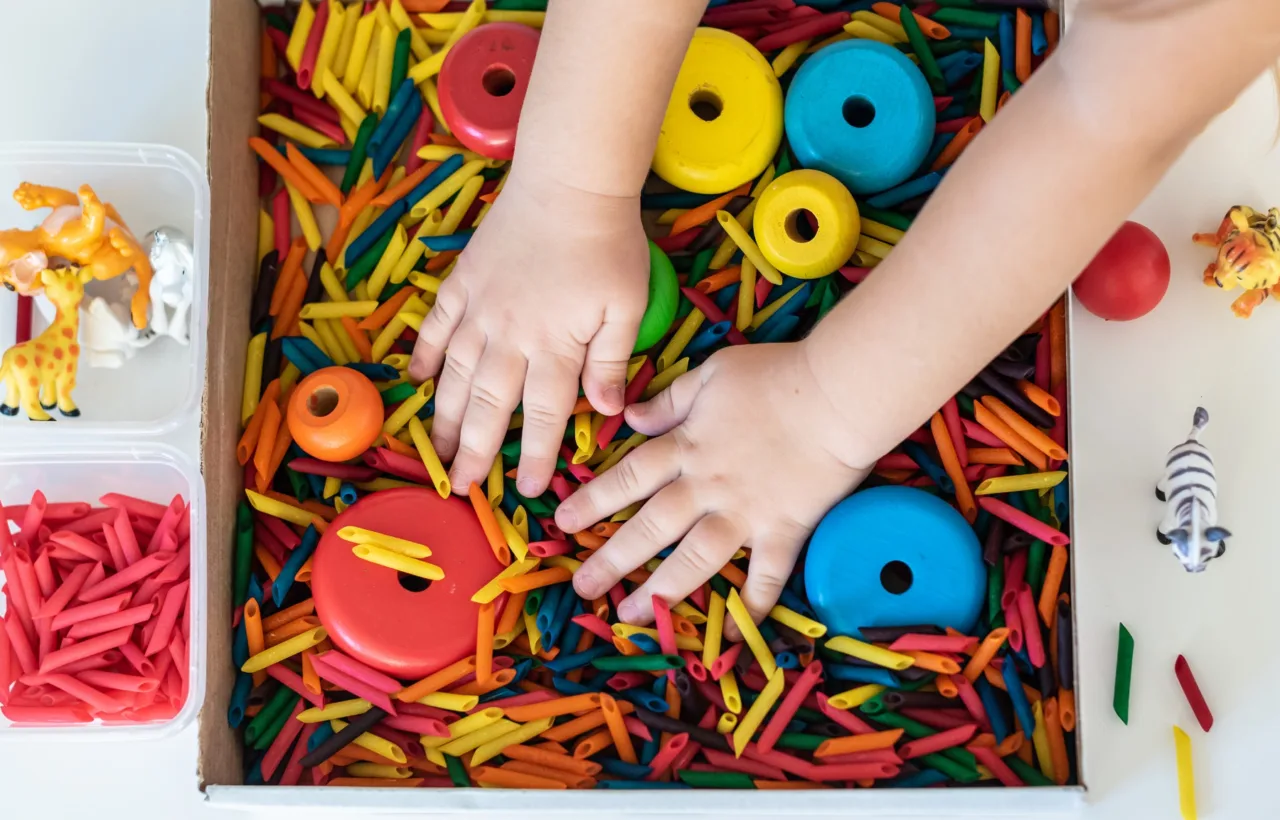
I fill a plastic storage bin with dry rice or oats. Add measuring cups, a few plastic animals, and a spoon. That is it. My toddler digs, pours, and buries toys for longer stretches than almost anything else.
Texture wins here. The scooping builds fine motor control without pressure. I switch the filler every week so it feels new. Rice stays cleaner than water for me. Honest limit: vacuum duty follows. Worth it for the calm it creates.
Scoop, pour, repeat. Simple magic.
3. Balloon Volleyball: Soft Chaos That Builds Coordination
I blow up one balloon and we bat it back and forth with open hands or paper-plate paddles. The slow float gives toddlers time to track and swing. We keep the score silly or ignore it completely.
Hand-eye work happens without them noticing. I love how it stays gentle on furniture. One balloon lasts a whole session. Trade-off: it drifts under the couch constantly. Still the easiest way I know to get giggles and movement together.
Keep it floating. Keep laughing.
4. Freeze Dance: Music Plus Impulse Control in One Go
I put on a playlist of upbeat songs and we dance hard. When I pause the music everyone freezes. My toddler freezes mid-spin and holds it with pure concentration.
Impulse practice hides inside pure fun. I switch songs often to match the energy. Short attention spans love the stop-start rhythm. Caveat: neighbors might hear the stomping. I still run this almost daily.
Music starts. Freeze. Instant engagement.
5. Animal Walks: Imagination Meets Full-Body Strength
I call out animals and we move like them across the room. Bear crawl. Frog hop. Penguin waddle. Crab walk. My toddler invents new ones after two rounds.
Whole-body strength builds without equipment. I join in fully because the laughs multiply. This works in tiny spaces. Honest note: carpet burns can happen on bare knees. Soft pants help.
Waddle, hop, crawl. Energy gone.
6. Shallow Water Play: Science and Calm in the Kitchen
I fill a shallow bin or the sink with a few inches of water. Measuring cups, sponges, and a couple of floating toys go in. Towels go under everything. My toddler pours and squeezes for ages.
Cause-and-effect learning shows up fast. Colors mix if I add a drop of food coloring. I stay right there the whole time. The trade-off is wet sleeves and floors. Still one of the longest attention holders I have.
Pour. Squeeze. Discover.
7. Tape Resist Painting: Art That Feels Like Magic
I stick strips of painter’s tape across paper in random lines. My toddler paints over the whole thing with washable colors. Peel the tape while the paint is still damp. Clean shapes appear.
The reveal moment never gets old. Process beats product every time. I use thick paper so it holds up. Cleanup is easier than free painting. Caveat: washable paint still stains if ignored.
Paint. Peel. Surprise.
8. Blanket Fort Building: Cozy Space for Quiet Play
I drape a sheet over the table or two chairs. Pillows and a flashlight go inside. Books or stuffed animals follow. My toddler crawls in and stays for story time or pretend camping.
Ownership of the space keeps them longer. I help build then back away. This resets overstimulated moods. Honest limit: the fort collapses eventually. Rebuilds become part of the game.
Crawl in. Stay awhile.
9. Indoor Scavenger Hunt: Clues That Spark Movement and Thinking
I hide three or four toys around one room. Simple verbal clues work: look under something soft or find the blue one. My toddler races to each spot with total focus.
Problem-solving and listening practice hide in the hunt. I keep the list short so success comes quick. This burns energy without open running. Caveat: hiding spots need to stay safe and reachable.
Search. Find. Cheer.
10. Stacking and Knocking Blocks: Physics Lessons in Action
I set out a pile of wooden or soft blocks. We stack as high as possible then knock it down on purpose. My toddler repeats the cycle with increasing height each time.
Cause and effect plus patience show up naturally. Soft blocks save toes. I let the tower fall without rescue. The only downside is the scatter. Cleanup becomes a race.
Stack high. Crash free.
11. Homemade Playdough Session: Squeeze and Create
I pull out a batch of simple playdough I keep ready in the fridge. Cookie cutters, a rolling pin, and a plastic knife join in. My toddler squishes, rolls, and stamps for long stretches.
Hand strength and creativity grow together. I sit nearby and model shapes without directing. Store-bought works if homemade feels like too much. Mess stays contained on a tray.
Squish. Roll. Make something.
12. Pom-Pom Drop Tubes: Gravity and Fine Motor Combo
I tape empty cardboard tubes to the wall at toddler height. Pom-poms or cotton balls go in the top and drop out the bottom. My toddler feeds them one by one with pure concentration.
Pincer grasp practice feels like a game. Different tube angles change the speed. I collect the pom-poms in a bowl below. The only issue is chasing strays under furniture.
Drop. Watch. Repeat.
13. Painter’s Tape Roads and Balance Beams: Lines That Direct Play
I stick long strips of painter’s tape on the floor in straight lines, curves, and zigzags. My toddler walks the lines carefully or drives toy cars along them. Sometimes we hop between squares.
Balance and focus improve with every step. Tape peels up clean later. I change the pattern every few days. Caveat: residual stickiness on some floors needs a quick wipe.
Walk the line. Stay steady.
14. Pretend Kitchen or Shop: Everyday Life Turned Play
I set out a few bowls, spoons, and empty food containers. My toddler “cooks” or runs a shop with stuffed animals as customers. Real kitchen helpers sometimes join for wiping or stirring.
Language and social practice explode here. I play along for a few minutes then let the story run. No special toys required. The trade-off is scattered “ingredients.” Easy to reset.
Cook. Serve. Imagine.
15. Interactive Story Time: Books That Demand Participation
I pick short board books and pause on every page. Point to pictures. Ask simple questions. Let my toddler turn the pages or finish a repeated line. We act out parts with gestures.
Language grows through the back-and-forth. Short sessions beat long ones. I keep a small stack ready in different rooms. Honest note: some days the book lasts two pages. Still counts.
Point. Name. Act.
16. Sock Ball Toss: Soft Targets for Gross Motor Practice
I roll clean socks into balls and set a laundry basket a few feet away. We take turns tossing. Distance starts close and grows. My toddler celebrates every successful drop.
Aim and arm strength develop without hard balls. Soft socks mean no broken lamps. I join the game fully. The only downside is the sock search afterward.
Toss. Score. Cheer.
17. Kitchen Band: Rhythm With Pots and Spoons
I hand over wooden spoons and a couple of overturned pots or plastic bowls. We bang out rhythms together. Sometimes we march around the kitchen while playing.
Sound exploration and timing appear fast. Volume stays manageable if I choose plastic first. I set a timer so it ends before ears tire. Neighbors may notice. We still love it.
Bang. March. Make noise.
18. Simple Hide and Seek: Classic Fun With Toddler Rules
I hide under a blanket or behind a chair in plain sight at first. My toddler finds me and we switch. Stuffed animals sometimes hide instead. Cuddles happen on every find.
Spatial awareness and turn-taking grow gently. Short rounds match short attention. I keep the space limited to one or two rooms. Safety first: no closed doors or tight spots.
Hide. Seek. Hug.
How to Choose Among These Indoor Activities for Toddlers
Match the activity to the energy level in front of you. High energy gets the obstacle course, animal walks, or freeze dance first. Quiet focus days call for the sensory bin, playdough, or tape painting. I rotate three or four options so nothing feels stale. Common mistake: setting up something elaborate when a simple tape line would work better. Start with what you already have on the floor or in the kitchen. My personal daily go-tos stay the obstacle course and the sensory bin because they cover movement and calm in one afternoon. Watch your toddler’s cues. If attention drops after three minutes, switch without guilt. The goal is connection and movement, not perfection.
Frequently Asked Questions
What is the best indoor activity for a beginner toddler just learning to walk?
The living room obstacle course with low cushions and a short tape line works best. It builds balance at a safe height and keeps success easy.
How do I pick among these 18 indoor activities for toddlers when time is short?
Choose anything under five minutes of setup like the sock ball toss or freeze dance. Those two need almost zero prep and still deliver movement and focus.
Do these activities really help with development or are they just time fillers?
They support real skills. Gross motor ones build strength and coordination. Sensory and fine motor ones strengthen hands and attention. I see the difference in climbing and focus after consistent use.
What if my toddler loses interest after two minutes?
Switch immediately to a different style. Movement to quiet or quiet to movement. Short attention is normal. The variety on this list exists for exactly that reason.
Are any of these safe without constant watching?
Most need eyes on, especially water play and anything with small pieces. The fort and interactive reading allow a bit more independent time once set up safely.
I keep coming back to these same eighteen because they turn trapped indoor days into something we both look forward to. Grab one item from the list the next time the walls start closing in. Start simple. Stay flexible. The fun follows.