
Preschoolers need to move. A lot. These 15 outdoor games for preschoolers gross motor activities turn backyard time into real skill-building without turning play into a chore. I have spent years watching little ones burn energy while quietly getting stronger legs, better balance, and sharper coordination. The ones on this list actually stick because they feel like pure fun.
Why These 15 Outdoor Games for Preschoolers Gross Motor Activities Made the Cut
I picked these after seeing what preschoolers actually return to again and again. Simple setup wins. No fancy gear required for most. Every game targets big muscle groups: legs, core, arms, and balance systems. I leaned toward options that work for mixed ages and energy levels. Some need zero equipment. Others use chalk or a ball you already own. I left out anything that felt forced or required constant adult micromanagement. The goal stays the same: kids move hard, laugh harder, and build skills without noticing the work.
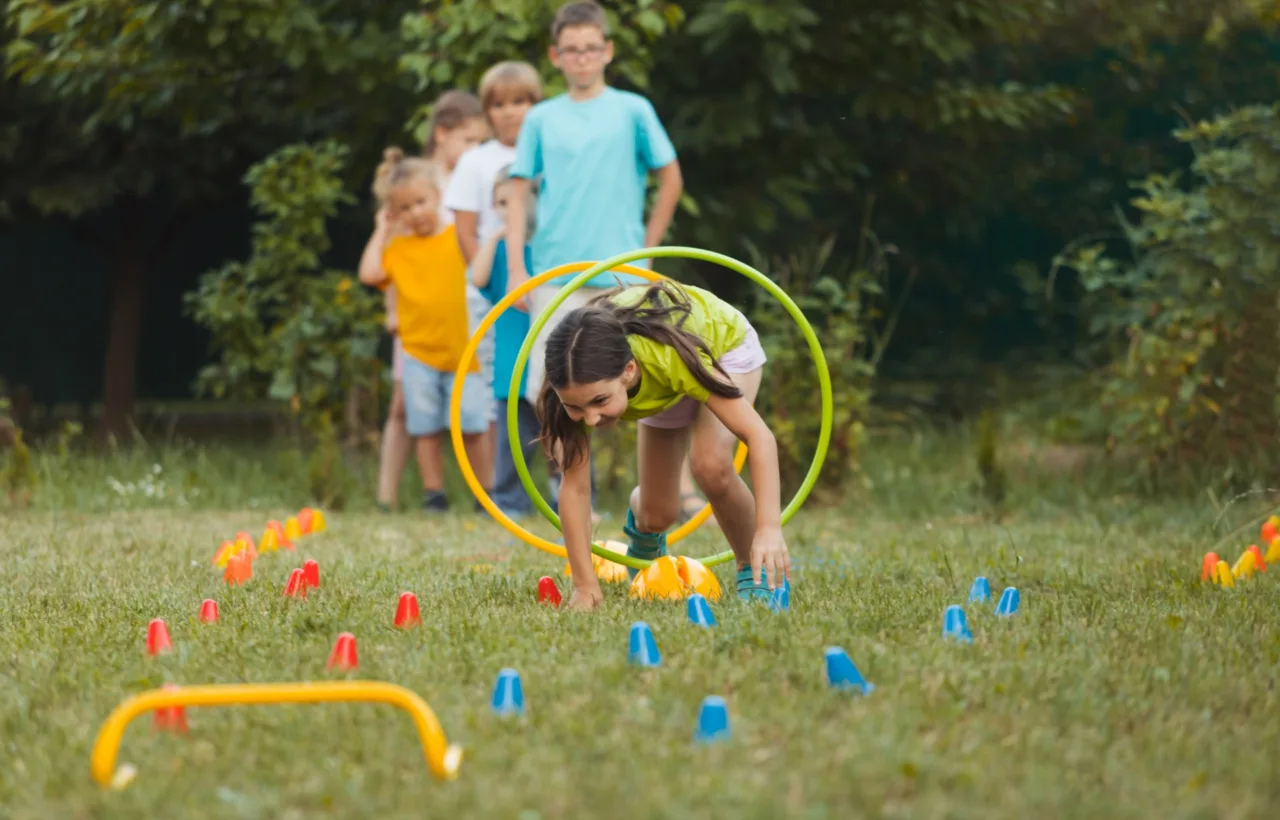
1. Backyard Obstacle Course: The Ultimate Energy Burner
I build one of these every few weeks with whatever sits in the garage. Chairs to crawl under. A hose to jump over. A tree to spin around. Kids invent new routes the second they finish the first lap.
The real magic sits in the variety. Climbing, crawling, hopping, and balancing all happen in one short path. My own kids used to argue over who got to design the next version. That ownership keeps them coming back.
Honest caveat: it can get chaotic fast if more than three kids join. Keep the path short and the rules loose. One simple rule works best: no pushing.
This one builds total-body strength faster than almost anything else on the list.
2. Hopscotch: Classic Jumping Power
Sidewalk chalk turns any driveway into a ready-made course. Draw the squares. Toss a marker. Hop. Repeat.
I love how this one sneaks in balance practice. Single-leg hops force kids to steady themselves mid-air. Number calling adds a quiet cognitive layer without killing the fun.
Some days my preschooler only wants the easy two-foot jumps. Other days she insists on one-foot challenges. Both versions work the same large muscle groups.
Key payoff: stronger legs and better spatial judgment.
Skip this if the pavement stays wet. Otherwise it ranks near the top for pure accessibility.
3. Freeze Tag: Controlled Chaos Done Right
One kid is “it.” Everyone else runs. Get tagged and you freeze until a free player taps you free again.
I watched this game transform a restless group of four-year-olds into focused movers in under five minutes. The freeze rule forces sudden stops that train body control better than any formal drill.
Honest trade-off: the “it” player can feel left out if the group stays huge. Switch roles often.
This remains one of my go-to outdoor games for preschoolers when space opens up and energy runs high.
4. Red Light, Green Light: Impulse Control Meets Running
Someone calls the lights. Green means race forward. Red means freeze. First one to the caller becomes the next light.
I still remember the first time my kid actually stopped mid-sprint on red. The look of pure pride on her face stuck with me. That self-control practice pays off later in classrooms and on playgrounds.
Start close together for younger preschoolers. Stretch the distance as confidence grows.
Standout feature: it builds listening skills and leg power at the same time.
Simple. Effective. Zero gear needed.
5. Bucket Toss: Throwing Accuracy Without the Pressure
Set out a few buckets at different distances. Soft balls or rolled socks become the ammunition. Kids toss until the buckets fill.
I rate this one high because success feels immediate. Even a near-miss earns cheers. Distance changes keep the challenge fresh without frustration.
Bold benefit: hand-eye coordination improves with every throw.
Caveat: windy days turn this into a comedy of errors. Choose a calm afternoon if you can.
This game scales perfectly from solo play to small groups.
6. Animal Races: Silly Movement That Builds Real Strength
Call out an animal. Everyone races to the finish line moving like that creature. Frogs hop. Penguins waddle. Horses gallop.
I use this when attention starts drifting. The laughter resets everything. Different animal styles hit different muscle groups without anyone realizing it.
My personal favorite variation: slow-motion animals. Kids exaggerate every step and end up working harder than regular running.
Watch for kids who stick to only one animal. Gently nudge them toward new ones to keep the body challenge balanced.
This one never fails to deliver giggles and genuine gross motor work.
7. Chalk Balance Path: Quiet Focus on Unsteady Feet
Draw a long wavy line or a series of zig-zags on the pavement. Kids walk heel-to-toe without stepping off. Add “lava” on both sides for extra drama.
I discovered this version after my child refused a traditional balance beam. The chalk felt safer and more playful. Concentration skyrockets once the lava story kicks in.
Core skill trained: proprioception and steady core control.
Keep the path short at first. Longer lines come later once balance improves.
This remains one of the calmest yet most effective options on the entire list.
8. Silly Movement Scavenger Hunt: No Walking Allowed
Hide a few easy items around the yard. The rule changes everything: kids must hop, skip, crawl, or tip-toe between finds. No regular walking.
I stole this idea after watching a group of preschoolers get bored with a normal scavenger hunt. The movement rule turned it electric. Marching to the next clue. Crawling under the bush. Suddenly every transition became part of the workout.
Honest limit: it works best with three to six items. Longer lists tire everyone out too fast.
This game combines exploration with constant varied motion. Hard to beat that combination.
9. Soft Ball Catch: The Foundation Skill
Large soft balls. Simple underhand throws. Catching, rolling, and gentle kicks all count.
I started here with my own kids because everything else builds on basic ball control. Early success matters. Soft balls remove the sting of missed catches.
Key reason it stays on the list: arm and core strength develop without pressure.
Switch to kicking games once throwing feels solid. Both directions matter for balanced development.
Keep sessions short. Ten focused minutes beats thirty distracted ones.
10. Hula Hoop Island Hopping: Jumping with Purpose
Scatter several hula hoops across the grass. Kids jump from island to island without touching the “ocean.”
I love the built-in distance judgment. Kids learn how hard to push off and where to land. Leg power and spatial awareness grow together.
Standout feature: the game scales by simply moving the hoops farther apart.
Younger preschoolers may need closer spacing at first. That is fine. Progress shows up fast once confidence appears.
This one feels like pure play while quietly delivering serious lower-body work.
11. Simon Says: Movement Commands That Matter
Simon only calls big movements. Jump. Spin. Touch the ground. Crawl forward. Kids follow only when “Simon says.”
I run this version outdoors so the movements stay large and free. Indoor Simon Says often stays small. Outside version forces full-body responses.
Quiet strength: listening skills and body awareness improve side by side.
Caveat: some kids get frustrated by the “Simon didn’t say” rule. Keep the tone light and switch leaders often.
This classic earns its spot because it requires zero setup and works for any group size.
12. Stick Ladder Jumping: Simple Rungs, Big Gains
Lay sticks or pool noodles parallel on the ground like ladder rungs. Kids jump the gaps. Start with two feet. Progress to one-foot hops.
I first tried this with pool noodles because sticks felt too permanent. The soft version still delivered the same coordination challenge. Spacing the rungs farther apart raises the difficulty without any extra gear.
Bold payoff: jumping power and rhythm both improve.
Watch for kids who rush. Slow, controlled jumps build better control than speed races.
This remains one of the easiest high-value activities I keep in rotation.
13. Bubble Chase: Pure Joy with Hidden Work
Blow bubbles. Kids chase and pop. That is the entire game.
I underestimate this one every single time until I watch the sprinting, leaping, and sudden direction changes. Gross motor skills get a full workout while kids stay completely absorbed.
Honest take: it works best on calm days. Wind turns bubbles into a short-lived tease.
Pair it with a movement rule sometimes. Only hop while chasing. Only crawl. The variation keeps it fresh.
Simple tools. Massive engagement. Hard to argue with that math.
14. Follow the Leader: Copycat Movement Mastery
One person leads. Everyone else copies the exact movements. Hop. Crawl. Spin. March. Switch leaders every minute or two.
I use this when energy needs direction but not competition. Kids practice body control by matching someone else’s pace and style.
My favorite twist: the leader can only use animal movements. Instant comedy and extra muscle variety.
This game shines in small groups. Large groups sometimes lose the visual connection to the leader.
Still one of the most flexible tools I reach for on busy afternoons.
15. Shadow Tag: Gentle Chase with a Clever Twist
Instead of tagging bodies, kids try to step on each other’s shadows. The “it” player changes once a shadow gets stepped on.
I discovered this variation on a sunny afternoon when regular tag felt too intense for the group. Shadows move constantly. Kids adjust their speed and path without realizing they are practicing agility and spatial awareness.
Key advantage: contact stays minimal. Perfect for mixed comfort levels.
It only works with clear sunlight. Cloudy days kill the game. Keep that limitation in mind.
This one still surprises me with how hard kids work while laughing the entire time.
How to Choose the Right Outdoor Games for Your Preschooler
Look at your space first. Tiny yard? Lean toward balance paths, stick ladders, and bucket toss. Big open field? Tag variations and animal races shine. Energy level matters too. High-energy mornings call for obstacle courses and freeze tag. Quieter afternoons suit chalk paths and soft ball catch.
I always start with one familiar game and add one new one. That mix keeps confidence high while still stretching skills. Watch for frustration. If a game produces more tears than smiles after two tries, swap it out. No single activity works for every kid every day.
Common mistake: overloading the session. Three solid games beat eight rushed ones. Leave room for free play at the end. That unstructured time often produces the best movement of all.
Personally I rotate between high-movement games and focus games. One week heavy on jumping and running. Next week heavier on balance and throwing. The variety prevents plateaus.
Frequently Asked Questions
How many of these outdoor games for preschoolers gross motor activities should I try in one day? Two or three full games plus free play works best. More than that and attention drops fast.
What if my preschooler refuses to join group games? Start with solo versions. Bucket toss and stick ladder need no partners. Build comfort before adding others.
Which game works best for beginners who still struggle with balance? Chalk balance path and soft ball rolling both keep the challenge low while still training the needed skills.
Do I need special equipment for most of these? No. Chalk, a soft ball, and a few household items cover the majority. Hula hoops help but stay optional.
How do I know if the activities are actually helping gross motor skills? Watch for smoother jumps, longer balance times, and fewer stumbles over a few weeks. Progress shows up in daily movement, not just during the games.
I keep returning to these same games because they deliver results without pressure. Kids move. Skills grow. Everyone stays happier. Start with the ones that match your space and energy today. Adjust tomorrow. That simple approach has worked for me longer than any rigid plan ever could.