
Rainy days used to leave me staring at the clock while two kids bounced off the walls. I needed real solutions for 13 play date activities indoor that worked without screens or endless cleanup. These ideas come from years of hosting friends over when the weather refused to cooperate. They keep energy high and tears low.
Why These 13 Play Date Activities Indoor Made the Cut
I picked every activity on this list because it needs almost nothing special. Most use stuff already sitting in your house. I tested them with mixed ages and different energy levels. The ones that survived repeated playdates share three things: quick setup, built-in social play, and an easy exit when attention drifts. No fancy kits. No perfect Pinterest moments required.
1. Blanket Fort Village: The Ultimate Hideaway
I drag out every blanket and pillow the second guests arrive. Kids stack chairs, drape sheets, and turn the living room into a fort city. They invent rules, assign rooms, and suddenly the afternoon has purpose.
The real magic happens when they start decorating. Crayons on paper become signs. Stuffed animals move in as neighbors. I stay nearby with snacks but stay out of the building process.
One trade-off: cleanup takes longer than the building. Still worth it. The fort becomes the base for every other activity that day.
Forts turn any boring room into their own world.
2. Indoor Obstacle Course: Burn the Wiggles Fast
I clear a path through the hallway and living room. Pillows become hurdles. Painter’s tape marks balance beams. A tunnel made from two chairs and a blanket forces them to crawl.
Kids race. They time each other. They invent new rules mid-course. Active movement like this resets the whole group mood.
Watch for furniture that tips easily. I learned that the hard way with a wobbly side table. Keep the course simple and the rules flexible.
This one saves every high-energy playdate.
3. Arts and Crafts Station: Messy Creativity Wins
I cover the table with paper and dump out markers, stickers, and scrap paper. No instructions. Just create. Some kids draw. Others make collages. A few invent games with the materials.
Shared supplies force natural turn-taking. That quiet negotiation is pure gold for social skills.
The caveat? Glue and glitter spread fast. I keep a wet cloth nearby and set a clear “art stays on the table” rule. Most kids respect it once they see the consequence is losing the good markers.
Creativity flows better when adults stop directing.
4. Indoor Scavenger Hunt: Clues and Teamwork
I write simple clues on sticky notes and hide them around the house. One clue leads to the next. The final prize is usually a small toy or a shared snack.
Younger kids need picture clues. Older ones handle riddles. Working together to solve each step builds the exact skills parents hope playdates create.
I keep the hunt short. Ten to fifteen minutes max. Drag it out and interest dies. The excitement of finding the next clue keeps them moving.
Clues beat screens every single time.
5. Pretend Bakery or Restaurant: Role Play That Lasts
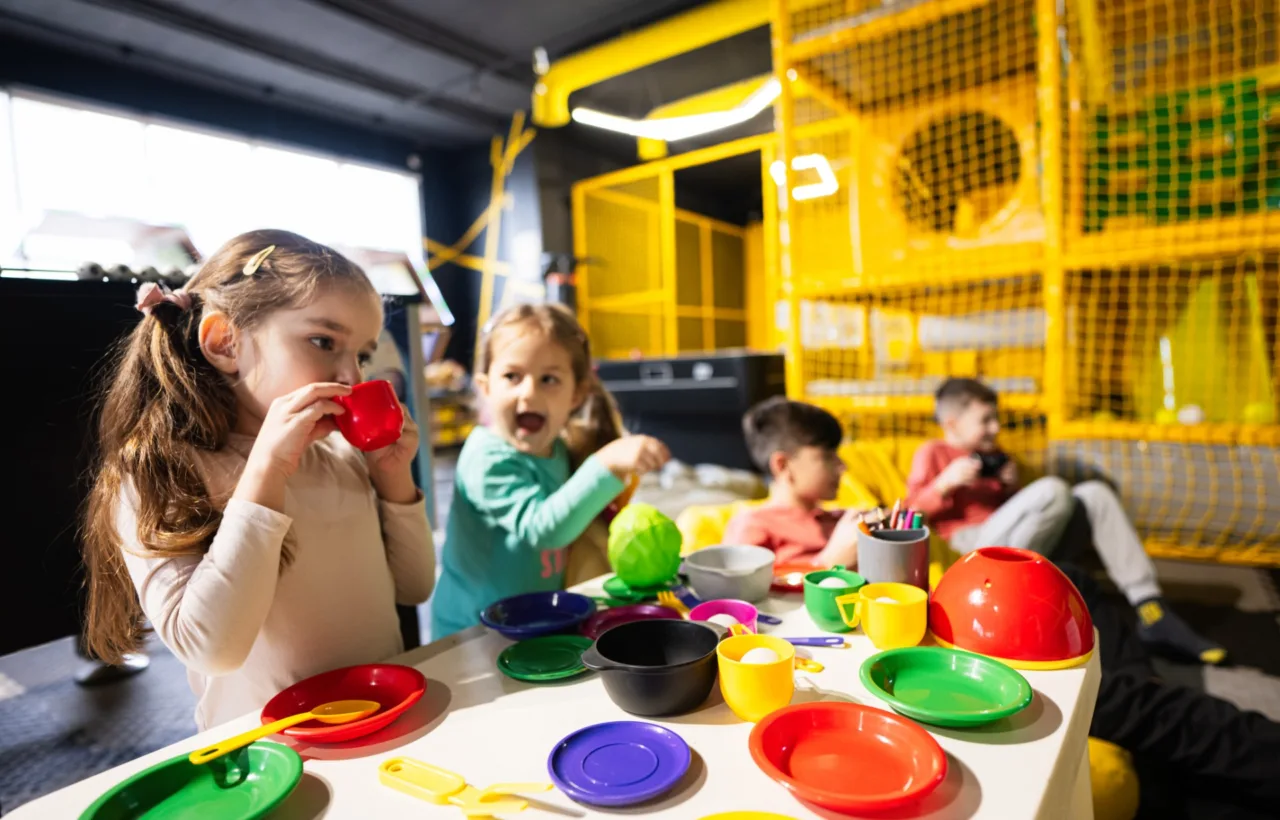
I set out play food, empty boxes, and paper for menus. Kids decide who bakes, who serves, and who pays with toy money. They invent specials and argue over prices.
This is pure social practice. Negotiating roles teaches more than any worksheet.
The downside is volume. The “customers” get loud. I set a noise boundary early and stick to it. When it works, the play stretches past an hour with almost zero adult input.
Imagination needs only a few props and permission to go wild.
6. Balloon Volleyball: Soft and Silly
One balloon. Two sides of the room. Hands or paper-plate paddles. The goal stays simple: keep it off the floor.
This game levels the field for different ages. Toddlers bat it. Older kids set rules about hits per side.
Balloons pop. I keep extras ready. Also, supervision matters for kids under five because of the choking risk with broken pieces. Still, the laughter is nonstop.
Soft competition feels better than hard rules.
7. Sensory Bin Exploration: Calm Focus
I fill a shallow bin with rice, dry pasta, or kinetic sand. Add scoops, small toys, and cups. Kids dig, pour, and invent stories.
Sensory play pulls in the quiet kids who avoid louder games. It also gives overstimulated ones a soft landing.
Mess is the clear trade-off. I put a sheet under the bin and accept some spill. The focused calm is worth the vacuum later.
Quiet hands often mean peaceful brains.
8. Freeze Dance Party: Music and Movement
I queue up three or four upbeat kids songs. Dance while the music plays. Freeze when it stops. Anyone who moves is out until the next round, or we just laugh and keep going.
No equipment beyond a speaker. Pure energy release.
Some kids hate being “out.” I run a version with no elimination. Everyone freezes and strikes a silly pose. The group energy stays high either way.
Music changes the whole mood in under a minute.
9. Homemade Playdough Session: Squeeze and Sculpt
I mix flour, salt, water, and food coloring ahead of time. Kids roll, cut shapes, and build tiny worlds. Shared tools mean shared ideas.
This is the activity that turns parallel play into real collaboration. One kid makes a snake. Another builds a nest for it.
Playdough dries out if left open. I store it in bags and plan to toss it after a few uses. The tactile focus keeps younger kids engaged longer than most toys.
Hands busy equals minds settled.
10. Sock Puppet Show: Stories on Stage
I grab clean socks, markers, and yarn for hair. Kids create characters in five minutes. Then they put on a show behind the couch.
Performance builds confidence faster than praise alone. The audience (usually me and the other parent) claps for every act.
Some kids freeze under attention. I let them perform for stuffed animals first. The shift from shy to spotlight usually happens by the second round.
A sock and a story are enough.
11. Indoor Bowling: Pins and Soft Balls
Empty plastic bottles or paper cups become pins. A soft ball or rolled socks act as the bowling ball. Tape marks the lane.
Simple scoring keeps older kids invested. Younger ones just love knocking things down.
The noise of falling pins can annoy neighbors. I use lighter cups when needed. Setup takes two minutes. Replay value lasts the whole afternoon.
Knocking things over never gets old.
12. Simple Science Experiments: Wonder in a Bowl
Vinegar and baking soda volcanoes. Milk and food coloring with dish soap. I gather the materials and let the kids lead the mixing.
Watching reactions together creates shared “whoa” moments. Those stick longer than most crafts.
Cleanup is real. I work over a tray and keep towels ready. The learning feels natural because curiosity drives it, not a lesson plan.
Wonder needs almost no preparation.
13. Indoor Picnic or Camping: Cozy Reset
I spread a blanket on the floor. Kids help pack a basket with sandwiches, fruit, and juice boxes. Flashlights come out for “camping” stories after the meal.
This slows the pace without killing the fun. After high-energy games, the picnic gives everyone a chance to talk and rest.
Food allergies require planning. I ask parents ahead and keep backups simple. The change of scenery (even if it’s just the living room floor) feels special.
A blanket turns lunch into an event.
How to Choose the Right Activity for Your Playdate
Start with the energy in the room. High-energy kids need the obstacle course or freeze dance first. Quieter groups settle into sensory bins or forts. Mix one active, one creative, and one calm option so you can shift when interest drops.
I always prep materials before anyone arrives. That single step keeps me from scrambling while kids wait. Watch for signs of overstimulation: raised voices, grabbing, or sudden tears. Switch activities before it escalates.
My personal favorite combo is the fort as home base, then a scavenger hunt that ends back at the fort with snacks. It feels connected instead of random. Avoid the trap of trying every idea in one visit. Three solid activities beat ten half-finished ones.
Honestly? The best playdates happen when I stop directing and let the kids take over. My job is setup and safety. Their job is the fun.
Frequently Asked Questions
What if the kids are different ages? Pick activities with flexible rules like forts, scavenger hunts, or balloon games. Older kids can lead. Younger ones follow along without feeling left out.
How do I handle mess without losing my mind? Set clear zones. Art stays on the table. Sensory bins sit on a sheet. I accept some mess as the cost of real play and plan cleanup time after the friends leave.
What’s the best option for a first-time playdate? Start with the blanket fort or indoor picnic. Both feel low-pressure and give shy kids an easy entry point while still encouraging interaction.
How many 13 play date activities indoor should I plan for one visit? Three is plenty. Have two backups ready in case one flops. Over-planning turns the afternoon into a schedule instead of play.
Do these work for kids who usually need screens? Yes. The key is starting with high-movement options like the obstacle course or freeze dance. Once bodies move, the quieter activities feel more appealing.
I used to think indoor playdates meant surviving until pickup. Now I look forward to them. These 13 play date activities indoor turned rainy afternoons into the ones the kids still talk about weeks later. Grab a few blankets, clear some floor space, and let them lead. You’ll be surprised how little you need to do once the play starts.